


How to choose a wholesale supplier for a small online store
Ask two wholesalers to quote for the same product and quantity, then compare the full cost of putting a saleable unit on your shelf. Place a small trial order and check the goods against the quote and your listing. Before committing to a larger purchase, find out how easily you can reorder the same variant.
Start with a product you know
Pick an item you already sell or one close enough to an existing line that you know what buyers expect. A familiar product gives you a benchmark for the condition of the retail pack, the information you need for your listing and the time it takes to pack an order. If you sell on several marketplaces as well as your own site, choose a line with enough regular sales to give you a reason to reorder within a sensible period.
Write a short specification from your current listing and an item on your shelf. Include the dimensions that matter to customers, what should be inside the retail pack, and the colour or version you want. Use the supplier's item code to confirm the match and ask for a photo of the exact version if the catalogue description is ambiguous. A change to one component can mean new photos and separate stock records, even when the two versions have similar names.
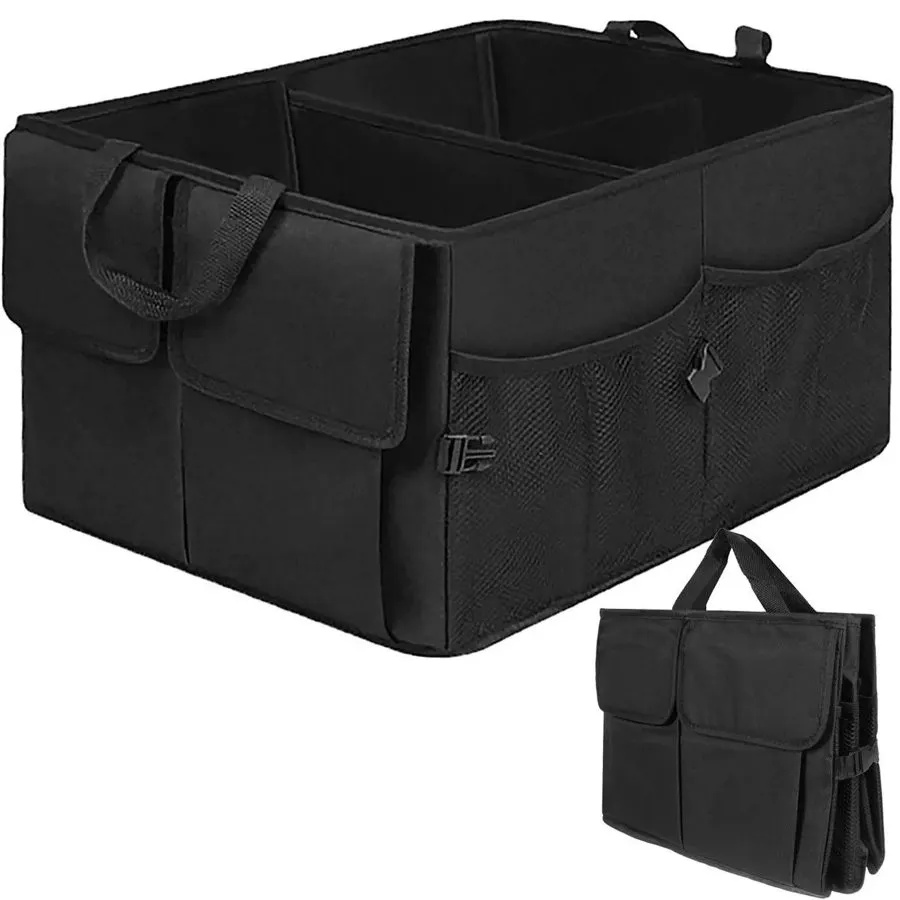
Maxy is a multi-category online wholesaler and direct importer that supplies online shops and marketplace sellers. You could start in Automotive if you already stock car accessories, or browse Home if household products give you a better benchmark. The foldable Trunk organizer O17233, item code 00017233, illustrates the detail to include. It has stiffened sides, one large and two smaller compartments, additional hook-and-loop and mesh pockets, and carry handles. Those details help you identify the correct version when the goods arrive and show buyers what they will receive.
Ask for quotes on the same terms
Put the same request to both suppliers and give them the delivery postcode. Specify the number of retail units you want to receive and ask how many wholesale packs you would have to buy. Ask whether there is a minimum order value or a separate minimum for that product. If one wholesaler can supply 24 units and another requires 36, record what each would actually charge and how much shelf space each order would take.
Ask for the item code, stock available for your order and the date the stock was checked. Confirm how long the quote stands and whether any stock is held for you once you accept. Ask the supplier to show the delivery charge and any handling charges, and to say whether the order would come in separate parcels. For buying within Europe, use the same currency and a quote to the same destination for your comparison. If prices are quoted in different currencies, write down the conversion you used and include any conversion fee you expect to pay.
At Maxy, wholesale pack quantities and available stock are shown on the product page. Prices are visible after you sign in with a business account, and the displayed price is per unit. Multiply the unit price by the pack quantity to find the amount you would commit to buying one pack. Save the item code, pack quantity and date checked alongside the price, so you can update the figures before placing the order.
If the pack size or a charge is unclear, get it confirmed in writing before you compare quotes. A supplier's answer can also show whether it is easy to get a precise response to a routine buying question.
Compare landed cost per saleable unit
For this comparison, take landed cost to mean what you spend getting goods ready for sale at your shop. Start with the goods, add delivery and any receiving or preparation costs attributable to that order, then divide by the number of saleable units. Use the same cost categories for every supplier. Track marketplace fees, packing for customer orders and outbound delivery separately when you assess whether the product fits your selling price.
Example with two quotes for 24 units. The figures below are illustrative. Both quotes cover the same variant and destination. The table assumes that all 24 units from each supplier can be listed for sale.
| Cost | Supplier A | Supplier B |
|---|---|---|
| Goods | 24 × €7.50 = €180 | 24 × €8.00 = €192 |
| Delivery | €24 | €12 |
| Receiving and preparation | €12 | €6 |
| Total | €216 | €210 |
| Landed cost per saleable unit | €9.00 | €8.75 |
On these assumptions, Supplier B costs €0.25 less per saleable unit. If two units from Supplier A arrive damaged and there is no credit or replacement, its order still costs €216 and provides 22 saleable units. The realised landed cost is then €9.82 per saleable unit, rounded to the nearest cent. Record any credit or replacement once it is confirmed and recalculate with the revised cost or saleable quantity.
If you need to fill a larger carton to reach a better unit price, work out how many weeks it will take you to sell the extra units at your usual rate. Space and cash can be tied up for much longer even when the cost per unit falls. For a mixed order, allocate the delivery charge on a consistent basis. A bulky item may account for much of the parcel space, so a split based solely on the number of units can distort your comparison.
Put a trial order through your normal workflow
Keep the first order small enough to fit your existing packing and storage arrangements. Save the quote and confirmation. Record the expected dispatch date you were given and the date the goods actually arrived. When you receive the cartons, match the item codes and quantities to the order, count the units your team can sell, and record any damage or shortfall before you put stock away.
Open one retail pack and inspect it as a buyer would. Check the variant, the contents and the condition of the packaging. See whether your team can photograph the product and describe it accurately using the information supplied. If the opened item can only be offered as open box stock, give it a separate status in your records. An opened sample can be a planned cost of the test, and recording it separately keeps your count of supplier discrepancies accurate.
Build a customer parcel using your normal protective packaging and measure its outside dimensions and weight. Check those measurements against the limits for your usual carrier service. A parcel that exceeds a size band by a small amount can incur a higher charge, and the product dimensions alone may leave that cost out of your estimate. Note any extra time spent repacking or relabelling the goods before they can go on sale.
If the delivery differs from the order, photograph the relevant label and goods and ask for a resolution. Record what the supplier asked you to provide, how the issue was resolved and how much work it created for your staff. The next purchase decision should reflect that work as well as the quoted price.
Check how a repeat order would work
Ask how to order the same item code again and what would happen if the variant were out of stock. Find out whether you would be contacted before a substitution and whether you can decline it. If a product uses one listing across multiple marketplaces, a change to the contents or packaging may mean updating each listing. Decide which features must remain consistent and keep that note with the item code.
Use your weekly sales to choose when to begin checking stock for a reorder. Allow time for the goods to arrive and for your team to make them available. If the product is unavailable, ask what information the supplier can provide about the next delivery and when to check again. Maxy publishes a delivery schedule on its website. Use it when planning a repeat purchase and check the available stock for the specific item before committing.
If the trial went well and sales support another purchase, place a modest repeat order. Compare the confirmed price, pack size and variant with the first order. Check what actually arrived using the same receiving procedure. If the supplier performs consistently across both orders, you have observations you can use to choose a larger order size. Keep the quantity within what you can sell and receive without disrupting your normal stock replenishment.
Keep your scorecard short. For each order, record how much of the requested stock was available, the landed cost per saleable unit, whether the product information matched the goods, and how any discrepancies were handled. Note which observations came from a quote and which came from an order you received. That distinction helps when a supplier you have yet to test looks just as good on paper.
Copy this checklist for your next supplier trial
- Specify the product version, retail pack contents, delivery address and number of units.
- Confirm the item code, wholesale pack size, dated stock figure and quote validity.
- Calculate the landed cost using the quantity you actually have to purchase.
- Inspect the first delivery and count saleable units before adding them to stock.
- Measure a packed customer order against your carrier's limits.
- Record any discrepancies, confirm the substitution process and compare a repeat order.
Save a dated copy of the scorecard with each quote and delivery record. Before increasing the order size, rerun the figures for the proposed quantity. Ask about any change in the delivery charge and confirm that your team can handle the larger intake without delaying the release of stock already waiting to go on sale.
FAQ
How big should my first wholesale order be?
Use the smallest pack quantity that gives you enough units to check the product and observe ordinary sales. Check whether the order minimum includes other items and how much stock you could comfortably hold if demand were slow.
What if two suppliers have different pack sizes?
Compare the full cost and saleable unit cost for the quantities you can actually order. Estimate how long each quantity would take to sell and how much cash you would commit until then.
How do I check whether the second order will match the first?
Quote the original item code and ask the supplier to confirm the exact variant and pack contents before you place the order. Ask to be contacted before any substitution and check the delivery against the original product record when it arrives.
Should I keep a second supplier for the same product?
A second source can help when a stock gap would disrupt regular sales. Check the backup product and packaging in advance, and assign it a separate record if the differences would affect what you tell customers.
Gabriela ZielińskaRead more